
How to Battle the Munchies: A Gentle Guide to Understanding Your Snacking Habits
If you’re someone who finds yourself reaching for snacks all day long, you’re not alone. Snacking isn’t a character flaw — it’s a signal. Your body, your habits, your emotions, or your environment are trying to tell you something. And together, we can figure out what that is.
Let’s walk through some simple, realistic strategies to help you feel more in control of your eating patterns without guilt, shame, or restriction.

1. Boost Your Protein Intake Throughout the Day
One of the biggest reasons people feel snacky is that they’re simply not eating enough protein. Protein keeps you fuller for longer, stabilizes blood sugar, and reduces cravings. If your meals are mostly carbs or light foods, your hunger will come roaring back quickly.
Try adding:
Eggs, Greek yogurt, cottage cheese
Chicken, turkey, fish
Beans, lentils, tofu
A small shift here can make a big difference.

2. Increase Fibre and Water
Fibre slows digestion, supports gut health, and helps you feel satisfied. Water works alongside fibre to keep everything moving and keep your hunger cues honest.
Great fibre boosters:
Vegetables
Berries
Chia or flax
Whole grains
Beans and lentils
If you’re constantly hungry, sometimes your body is actually asking for hydration.
3. Upgrade Your Snacks Instead of Cutting Them Out
Snacking isn’t the enemy — mindless snacking is.
If you love snacks, let’s keep them… but make them work for you.
Try:
Apple + peanut butter
Greek yogurt + berries
Hummus + veggies
Popcorn + nuts
Cheese + whole‑grain crackers
These options give you staying power instead of a quick spike and crash.

4. Ask Yourself: Why Am I Eating Right Now?
This is a big one.
Sometimes the munchies aren’t about hunger at all. They’re about:
Stress
Boredom
Habit
Procrastination
Emotional comfort
Avoiding a task or feeling
Before you grab something, pause for 10 seconds and ask:
“What do I actually need right now?”
Maybe it’s a break. Maybe it’s connection. Maybe it’s rest. Maybe it is food — and that’s okay too.
This tiny moment of awareness can change everything.

5. Look at Your Overall Intake Through the Day
If you’re under‑eating earlier, your body will absolutely make up for it later — usually at night, and usually with snacks.
Ask yourself:
Did I eat balanced meals today?
Did I include protein, fat, carbs, and vegetables?
Did I skip meals or eat too lightly?
Your body isn’t misbehaving — it’s trying to catch up.

6. Adjust Your Meal Timing
If nighttime snacking is your struggle, it might be because your eating window is too small or your meals are too spaced out.
You might benefit from:
A slightly later dinner
A planned evening snack
Eating more earlier in the day
Shortening the gap between meals
Sometimes the solution is simply feeding your body when it actually needs fuel.
7. Create a Snack‑Smart Environment
Your environment shapes your habits more than your willpower ever will.
Try:
Keeping high‑protein, high‑fibre snacks visible
Storing trigger foods out of sight
Pre‑portioning snacks
Having a “go‑to” list of satisfying options
You don’t need to remove foods — just set yourself up for success.

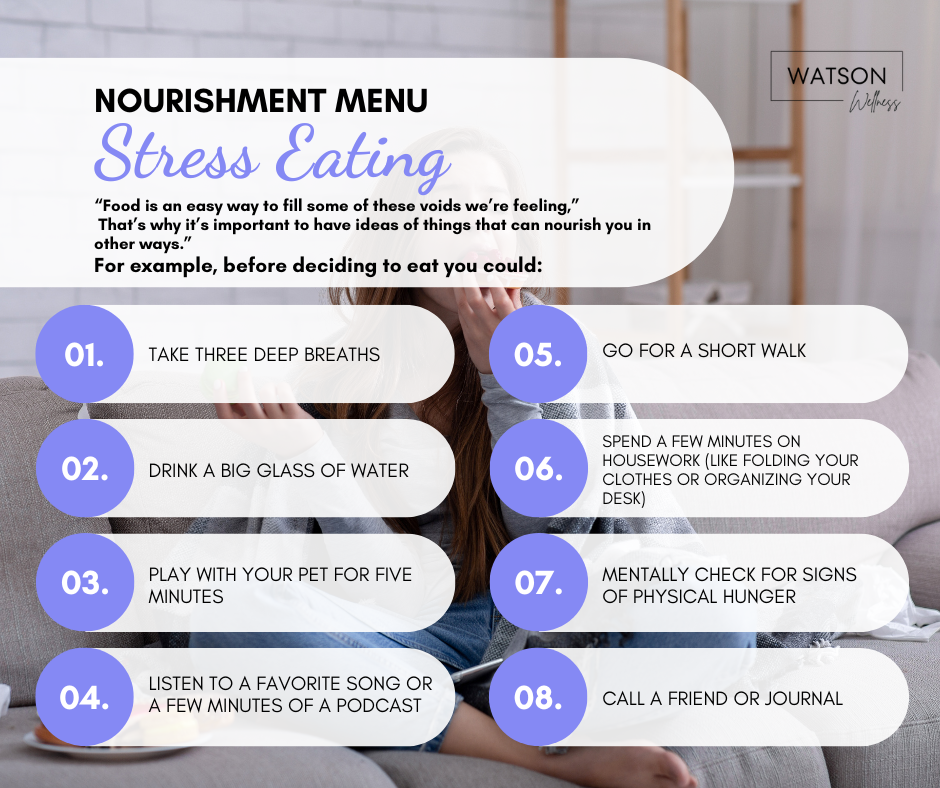
8. Build Non‑Food Coping Tools
If snacking is tied to emotions, we want to expand your toolbox.
Some ideas:
A short walk
Deep breathing
A warm drink
Journaling
Calling a friend
Stretching
A hot shower or bath
Doing something with your hands (puzzle, knitting, tidying)
Food can be comfort — but it doesn’t have to be the only comfort.
You Don’t Have to Battle the Munchies Alone
Snacking isn’t a failure. It’s feedback. And with a few small shifts — in your meals, your habits, your environment, and your awareness — you can feel more in control and more connected to your body’s needs.
If you want help identifying your personal snacking patterns or building a plan that fits your lifestyle, I’m here to support you every step of the way.


Comments