
Why Fresh Milling Wheat Is Making a Wellness Comeback
Fresh flour has a smell you do not forget. It is warm, nutty, a little sweet, and completely different from the bag of flour that has been sitting in the pantry for months.
That is part of why so many home bakers, wellness-minded families, and curious beginners are coming back to an old habit: milling wheat at home.
Milling your own wheat simply means grinding whole wheat berries into flour when you need it. For most people, that happens in a small electric grain mill on a kitchen counter. It is simple, practical, and surprisingly satisfying.
It is also a reminder that flour is not just a baking ingredient. It starts as a whole food.
This guide walks through why fresh-milled flour is gaining attention again, how modern grain processing changed what we think of as “flour,” what to know about gluten, and how to get started without feeling overwhelmed.
🌿 My Personal Experience with Fresh‑Milled Flour
Since I began milling my own wheat, I’ve noticed remarkable changes in my health and wellbeing.
✨ The eczema bumps and redness on my upper arms have nearly disappeared.
✨ Any stubborn warts are gone, and my allergies have improved so much that I’ve been able to reduce my allergy medication significantly.
✨ For anyone struggling with constipation, this has been a game‑changer — the fiber and freshness make a noticeable difference for adults and kids.
✨ My parents, who both live with diabetes, have found that eating bread made from fresh‑milled flour helps keep their blood sugars more stable.
These are our personal experiences, not medical advice — but they’ve deepened my appreciation for how real, unprocessed foods can support the body’s natural balance.
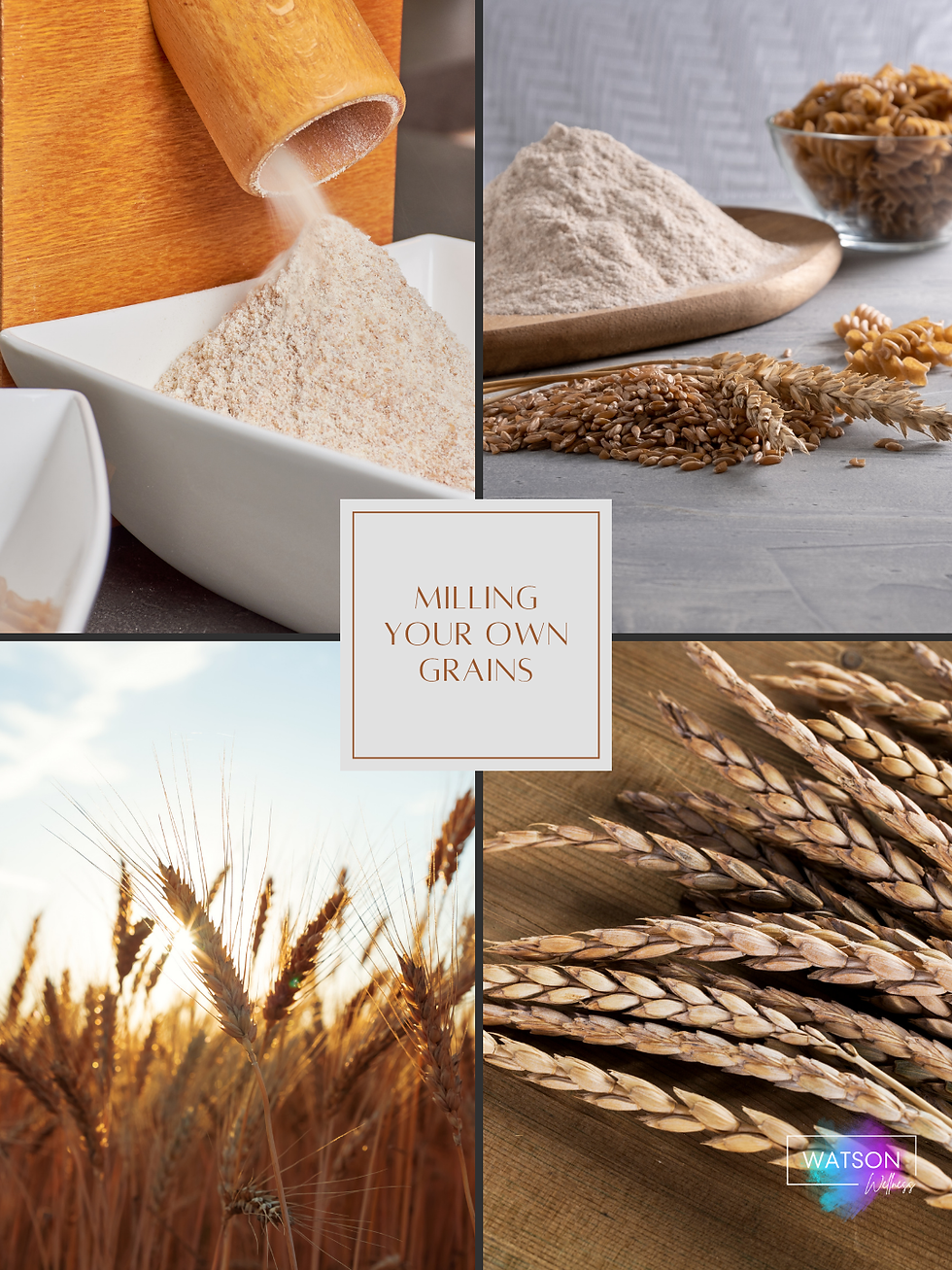
What fresh milling means
Fresh milling means grinding whole grain, usually wheat berries, into flour shortly before using it.
A wheat berry is the whole wheat kernel. It has not been stripped apart. When you mill it at home, you keep all three parts of the grain together.
Part of the grain | What it contributes |
Bran | Fibre, minerals, and structure |
Germ | Healthy fats, vitamin E, B vitamins, and flavour |
Endosperm | Starch and protein, including gluten-forming proteins |
That whole-grain package is the main reason fresh milling feels so different from scooping flour out of a standard bag.
Store-bought white flour is usually made mostly from the endosperm. The bran and germ are removed to create a lighter, softer flour with a longer shelf life. In Canada, many white flours are enriched with certain vitamins and minerals after milling, which helps replace some nutrients lost during processing. Still, enrichment does not put the whole grain back together.
Commercial whole wheat flour is closer to the original grain, but it is still processed for storage, shipping, and consistency. It may be milled weeks or months before you buy it. Fresh-milled flour is different because it is alive with aroma, oils, texture, and flavour right after grinding.
That freshness changes the baking experience.
Bread made with fresh flour can taste more complex. Pancakes can feel heartier. Muffins often need less added flavour because the flour itself brings something to the recipe.
For many people, the biggest surprise is that fresh flour does not taste “heavy” in the way some whole wheat products do. When wheat is milled right before baking, the flavour is often sweeter, warmer, and less bitter.
Why people are returning to this old habit
Fresh milling wheat is making a wellness comeback because it brings food back to a form people can see and understand.
There is something grounding about pouring wheat berries into a mill and watching flour come out. The process is quick, but it reconnects a modern kitchen to an older rhythm.
For many home bakers, the appeal comes down to five things.
Freshness
Flour contains natural oils, especially from the germ. Once grain is milled, those oils are exposed to air. Over time, they can lose freshness and develop stale or rancid flavours.
Whole wheat berries, by contrast, store well when kept cool, dry, and sealed. Milling only what you need helps preserve flavour until the last minute.
Flavour
Fresh flour has character. Different grains taste different. Hard red wheat has a stronger, classic whole wheat flavour. Hard white wheat is milder. Spelt can taste slightly nutty and sweet. Einkorn has a golden colour and a more delicate flavour.
That variety can make baking feel creative again.
Nutrition
Whole grains contain fibre, vitamins, minerals, antioxidants, and beneficial plant compounds. When you mill the whole berry, you keep the bran and germ in the flour.
This does not mean fresh-milled flour is a cure-all. It is still flour, and the way it affects the body depends on the full meal, portion size, recipe, and individual health needs. But as a whole-food ingredient, it offers more of the grain than refined white flour does.
Control
Milling at home lets you choose the grain, the texture, and the amount. You can mill fine flour for sandwich bread or a slightly coarser flour for rustic loaves and crackers.
You also know exactly what is in it: grain.
Enjoyment
This part matters. Wellness habits are easier to keep when they feel good.
Milling wheat is not only about nutrition. It is tactile and simple. It adds a small moment of care to baking, and that can make the final loaf feel more meaningful.
Pros ✓ | Cons ✗ |
Full nutrition preserved — nothing removed, nothing added | Upfront cost of a grain mill (~$200–$800+ depending on the model) |
Tastes noticeably better than store-bought flour | Small learning curve — recipes may need slight adjustments (hydration, resting time) |
Simple once you get the hang of it | Fresh-milled flour doesn't behave exactly like commercial all-purpose flour |
Cost-effective over time — wheat berries are affordable | Requires sourcing wheat berries (though widely available online and at bulk food stores) |
You control the grind — fine for pastries, coarser for hearty breads | Milling takes a few extra minutes in your routine |
Wheat berries last 25+ years when stored properly | Can be noisy depending on the mill |
A meaningful step toward whole-food, from-scratch living |
🌾 Fresh‑Milled Flour vs Store‑Bought Flour
A Clear Comparison of Nutrition, Quality, and Health Impact
Category | Fresh‑Milled Flour | White Flour (Refined) | Unbleached White Flour | Store‑Bought Whole‑Wheat Flour |
Fiber | 100% retained | ~0% | ~0% | Lower than fresh; some loss from oxidation |
Vitamin E | 100% retained (germ intact) | ~90% lost | ~90% lost | Degrades during storage |
B Vitamins | Naturally present | >50% removed, then synthetically added back | Same as white flour | Reduced over time |
Minerals (iron, zinc, magnesium) | Fully retained | Major loss | Major loss | Partial loss due to processing + aging |
Healthy Fats | Present (germ intact) | Removed | Removed | Present but oxidized |
Antioxidants & Phytonutrients | High | Almost none | Almost none | Reduced due to storage |
Shelf Life | 1–3 days (fresh) | Months–years | Months–years | Months |
Blood Sugar Impact | More stable due to fiber + intact grain | Higher spikes | Higher spikes | Moderate |
Processing Method | Stone‑milled at home, no heat | Roller‑milled, bran & germ removed | Roller‑milled, bran & germ removed | Roller‑milled, heat‑processed |
Flavour | Rich, nutty, aromatic | Mild, neutral | Mild, neutral | Slightly nutty but less vibrant |
Protein Quality | Intact, unoxidized | Altered by aging | Altered by aging | Oxidized over time |
How grain processing changed over time

For most of history, flour was local and fresh by necessity.
Communities grew grain, stored it as whole kernels, then milled it in small batches. Flour did not sit around for long because whole-grain flour naturally contains oils from the germ. Those oils are nutritious, but they also shorten shelf life once the grain is ground.
That changed in a big way in the late 1800s with industrial roller milling.
Roller mills made it easier to separate the grain into parts. Millers could remove the bran and germ, leaving a lighter flour made mainly from the starchy endosperm. This flour was softer, paler, and much more shelf-stable.
That shift helped feed growing cities and made flour easier to transport. It also changed what people expected bread to look and feel like. White bread became associated with softness, convenience, and consistency.
The tradeoff was that flour became less whole.
The bran and germ contain much of the grain’s fibre, flavour, minerals, and oils. Removing them gave flour a longer pantry life, but it also removed key parts of the original food.
This is not about blaming modern flour. Shelf-stable flour has made baking accessible and affordable for many households. It works beautifully for pastry, cakes, sauces, and quick weekday baking.
The point is simpler: fresh-milled flour gives you another option. It lets you use the whole grain in its freshest form.
What fresh flour means for gluten
Gluten is one of the most common questions that comes up when people start talking about wheat.
Gluten is a group of proteins found in wheat, barley, and rye. In bread dough, gluten helps create stretch and structure. It traps gas from yeast fermentation, which gives bread its rise.
Fresh milling does not remove gluten. If you mill wheat, the flour still contains gluten.
That matters, especially for anyone with celiac disease. People with celiac disease must avoid gluten completely, including fresh-milled wheat, spelt, einkorn, rye, and barley. Freshness does not make gluten safe for celiac disease.
For people who do not have celiac disease but feel sensitive to wheat, the picture can be more personal and more complex. Some people find that long-fermented sourdough or fresh whole-grain baking feels different for them than highly processed wheat products. That may relate to fermentation, fibre, additives, portion size, or other parts of the meal.
From a baking point of view, gluten is also why grain choice matters.
Hard wheat has more protein and is usually better for yeast breads. Soft wheat has less protein and works well for muffins, pancakes, biscuits, cookies, and quick breads. Ancient grains like spelt and einkorn can be lovely, but they often behave differently in dough and may need gentler handling.
Fresh-milled wheat is still wheat. The benefit is not that it removes gluten. The benefit is that it keeps the grain whole and fresh.

🌾 How I Got Started Milling My Own Wheat
When I first stepped into the world of fresh‑milled flour, I kept things simple. I started with food‑grade storage buckets, a grain mill, and a couple of basic wheat varieties. You truly don’t need much to begin — and that’s one of the things I love about this process.
My First Grains
I began with:
Soft white wheat — perfect for muffins, pancakes, cookies, and tender baked goods
Hard red wheat — great for hearty breads with a rich, nutty flavour
Both were easy to work with, and they gave me a feel for how fresh flour behaves in different recipes.
Where I Source My Wheat
I’m fortunate to have access to a local Mennonite mill that sells whole grain kernels. Their wheat berries are fresh, affordable, and high quality. If you don’t have a local source, there are plenty of reputable online suppliers that ship directly to your door.
The Mill I Use
After researching and chatting with others in the fresh‑milled flour community, I chose the Mockmill 100 — and it’s been fantastic. It’s compact, easy to use, and produces beautifully fine flour.
You can take a look at the model here: 👉 https://www.mockmill.ca/collections/mockmills
Starting small made the whole process feel doable. A bucket, a mill, and a bag of wheat berries — that’s really all it takes to begin.
How to start without overwhelm
You do not need to replace every flour in your kitchen overnight. In fact, it is better if you do not.
Fresh-milled flour has a learning curve. It absorbs water differently. It may ferment faster. It can make dough feel stickier at first. Starting small makes the process enjoyable instead of frustrating.
Start with one grain
Hard white wheat is a gentle starting point for many beginners because it has a mild flavour and works well in bread.
Hard red wheat has a stronger, earthier whole wheat taste. It is excellent for hearty loaves.
Soft white wheat is a great choice for pancakes, muffins, banana bread, cookies, and other tender bakes.
If you want to experiment later, try spelt, rye, einkorn, khorasan, or buckwheat. Some are wheat, some are not, and each behaves differently.
Choose a simple first recipe
Start with something forgiving.
Good first options include:
Pancakes
Waffles
Muffins
Banana bread
Simple sandwich bread made with part fresh flour
Quick breads are especially friendly because they do not rely as heavily on gluten development. They let you taste the flour without worrying about perfect dough strength.
If you already bake bread, try replacing 25 to 50 percent of the flour in a familiar recipe with fresh-milled flour. That gives you a feel for texture and flavour before going all in.
Mill only what you need
Fresh flour is best used soon after milling. Many bakers mill right before mixing dough.
If you mill extra, store it in an airtight container. For short-term use, the fridge can help preserve freshness. For longer storage, the freezer is a better choice.
Whole wheat berries are easier to store than flour. Keep them in sealed containers in a cool, dry place. Food-grade buckets, jars, and airtight bins all work.
Expect to adjust the water
Fresh-milled flour often absorbs more liquid than refined flour. Whole grain flour includes bran, which soaks up water over time.
If dough feels dry, add water gradually. If it feels sticky, wait before adding extra flour. A short rest can make a big difference because the bran needs time to hydrate.
Many fresh-milled bread bakers use an autolyse, which is a simple rest after mixing flour and water. Even 20 to 30 minutes can help the dough become smoother and easier to handle.
Do not chase perfection
The first loaf may be dense. The first batch of muffins may need a little more liquid next time. That is normal.
Fresh milling is a skill, but it is not a fussy one. The goal is to build confidence through repetition.
Keep notes as you bake:
What grain you used
How fine you milled it
How much liquid the recipe needed
How the dough felt
What you would change next time
A few notes can save a lot of guessing.
What equipment you actually need
The basic setup is simple.
You need wheat berries, a grain mill, storage containers, and a recipe you already feel comfortable making.
Electric grain mills are popular because they are fast and easy to use. Many can mill flour fine enough for bread. Manual mills also exist, and they can be useful for small batches, but they take more effort.
Before buying a mill, think about how you plan to use it.
If you want to bake bread every week, choose a mill that can handle regular use and fine flour. If you mostly want pancakes and muffins, you may not need the highest-capacity option.
A few practical details help:
Check whether the mill is designed for dry grains only
Let the mill cool if the manufacturer recommends pauses
Avoid milling oily seeds or nuts unless the mill specifically allows it
Clean according to the instructions
Store grain away from moisture and strong odours
You can also start before buying a mill by finding a local grain source that offers freshly milled flour, or by borrowing a mill from someone who already has one. That gives you a feel for the flour before investing in equipment.

Easy ways to use fresh-milled flour this week
If you are curious, start with one low-pressure bake.
Try fresh-milled flour in pancakes on a weekend morning. Use soft white wheat if you have it, or hard white wheat for a heartier result. Let the batter rest for 10 minutes before cooking so the flour can hydrate.
Make banana bread with half fresh-milled flour and half all-purpose flour. The banana keeps the loaf moist, and the fresh flour adds flavour.
Bake crackers with fresh flour, olive oil, salt, and water. Roll them thin, cut them into squares, and bake until crisp. This is one of the easiest ways to taste the grain itself.
If bread is calling your name, begin with a blend. Use part fresh-milled hard wheat and part bread flour. Once you learn how the dough feels, increase the fresh flour over time.
Small steps count. A pantry does not need to become perfect to become more nourishing.
The takeaway
Fresh milling is making a comeback because it offers something many people are craving: simple food, made close to its source, with more flavour and less mystery.
It does not need to be complicated. You can start with one grain, one recipe, and one small batch of flour. Learn how it feels. Notice the flavour. Adjust as you go.
There is something deeply satisfying about turning wheat berries into warm bread, pancakes, muffins, or crackers in your own kitchen. It is practical, nourishing, and rooted in a way of cooking that never really stopped making sense.
🎧 To Learn More
If you missed our recent chat or want to revisit the conversation, you can listen to the full recording here: 👉 Workshop Recording — Milling Your Own Wheat Passcode: 2VR3=c!E
Resources
Milling Your Own Wheat
🎥 Sue Becker — “Real Bread, the Staff of Life” Sue Becker is one of the leading voices in the fresh‑milled flour world. This YouTube video was incredibly helpful when I was first researching and considering making the switch. It’s a bit long, but I watched it in 20‑minute chunks — and honestly, once I got going, I found it fascinating! 👉 Watch on YouTube
🍞 My Favourite Recipes So Far I’ve been collecting my favourite fresh‑milled flour recipes and am putting together a printable recipe book for myself. Here’s a peek at what I’ve been making! 👉 View My Recipe Collection
📖 Book Recommendation A go‑to resource in the fresh‑milled flour community: The Essential Home‑Ground Flour Book: Learn Complete Milling and Baking Techniques, Includes 100 Delicious Recipes by Sue Becker


Comments