
🌱 Plant-Based Protein Made Simple
A gentle, real‑life guide to getting enough protein—without overthinking it.

If you’ve ever tried to eat more plant-based meals—whether you’re vegetarian, vegan, flexitarian, or simply “plant-curious”—you’ve probably heard the question:
“But how do you get enough protein?”
Let’s take the stress out of that question. You can get enough protein eating mostly plants. You don’t need perfection, complicated food rules, or a nutrition degree. You just need a little clarity, a few simple habits, and the freedom to experiment.
This guide will help you understand what protein does, how much you need, and how to make plant-based protein feel easy and doable in your everyday life.
💪 Why Protein Matters
Protein is your body’s repair crew. It helps you:
Maintain muscle (which keeps your metabolism steady)
Support your immune system
Recover from workouts
Stay fuller longer
Keep your hair, nails, skin, and hormones happy
Most people—plant-based or not—feel better when they slightly increase their protein intake.
📏 How Much Protein Do You Actually Need?

Your ideal amount depends on your age, activity level, and goals. But here’s a simple starting point:
Sedentary adults: ~0.8 g per kg of bodyweight
Active adults: 1.2–2.2 g per kg
Adults 65+: 1.2–2.0 g per kg
Plant-based eaters: Aim a little higher, because plant proteins are digested differently
You don’t need to track obsessively. Just aim to include a palm-sized portion of protein at most meals.

🌿 Great Plant-Based Protein Sources
Here are easy, everyday options that fit beautifully into a balanced plate:
High-Protein Plant Foods
Lentils
Chickpeas
Black beans, kidney beans, navy beans
Edamame
Tofu
Tempeh
Split peas
Quinoa
Hemp hearts
Pumpkin seeds
Soy yogurt (unsweetened)
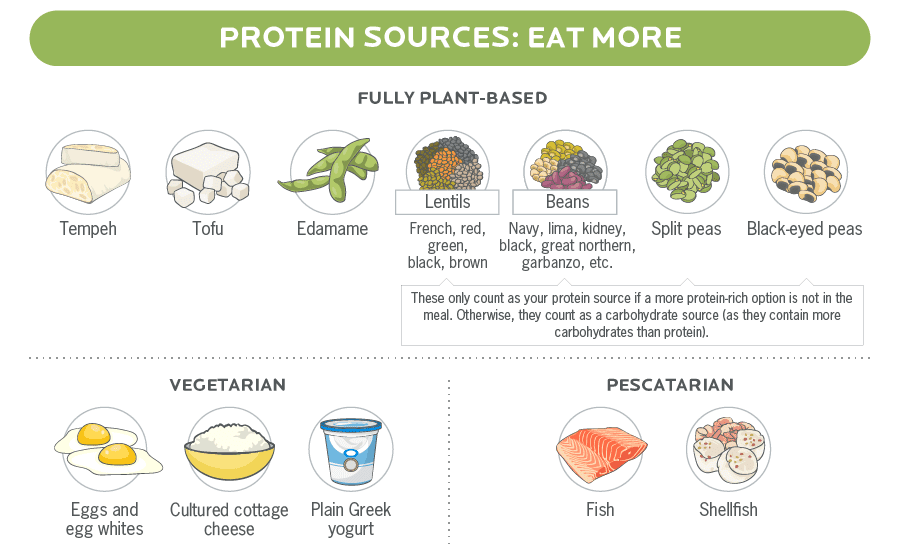
Vegetarian Options (if you include them)
Eggs
Greek yogurt
Cottage cheese
Pescatarian Options
Salmon
Trout
Cod
Shrimp
Mussels
Protein Powders (optional)
Pea, soy, hemp, or rice protein can be helpful—especially if you’re busy or struggle to hit your protein goals.


🥗 Easy Ways to Boost Protein Without Changing Your Whole Diet

You don’t need to overhaul your meals. Just “plantify” what you already enjoy.
Try these simple swaps:
Add chickpeas to your pasta
Mix lentils into your chili
Swap chicken for tofu in your stir-fry
Add hemp hearts to your oatmeal or yogurt
Blend a scoop of protein powder into your smoothie
Choose Greek yogurt instead of regular yogurt
Add edamame to your salad or grain bowl
Small changes add up quickly.
😣 Common Plant-Based Protein Struggles (and gentle fixes)
1. “Beans upset my stomach.”
Totally normal—especially if you increase fiber too fast.
Try this:
Add beans slowly (a few spoonfuls at a time)
Rinse canned beans well
Try gentler options like split peas or lentils
Eat slowly and chew well
Consider digestive enzymes if needed
2. “I can’t seem to hit my protein goals.”
You’re not alone.
Try this:
Include protein at every meal
Use protein powder strategically
Mix plant and animal proteins if you’re flexible
Remember: your weekly average matters more than any single day
3. “I don’t know how to cook plant proteins.”
Start simple.
Try this:
Tofu stir-fry
Lentil soup
Chickpea salad
Tempeh tacos
Edamame + veggies + rice bowl
Keep a running list of plant-based meals you enjoy. Build your rotation slowly.
🌱 Is Plant Protein As Good As Animal Protein?
This is one of the most common questions I hear from clients who are trying to eat more plants:
“Do I need animal protein to be healthy?”
Short answer: No. Longer answer: Plant and animal proteins are simply different—and understanding those differences helps you make confident choices.
Let’s break it down in a simple, real‑life way.
🧩 Protein = Amino Acids (Your Body’s Building Blocks)
Think of amino acids like Lego pieces. Your body uses them to build and repair muscle, create hormones, support your immune system, and keep your metabolism humming.
Your body uses 20 amino acids, and they fall into three groups:
Non‑essential: Your body can make these on its own.
Conditionally essential: Your body usually makes these, but may struggle when you’re sick, stressed, or recovering from tough workouts.
Essential amino acids (EAAs): Your body cannot make these—so you must get them from food.
Among the EAAs, there’s a special trio called branched‑chain amino acids (BCAAs)—leucine, isoleucine, and valine. These are especially important for muscle repair and growth, with leucine being the “spark plug” that helps turn on muscle protein synthesis.
But here’s the key: Your body needs all nine EAAs—not just leucine—to fully repair and build muscle.
🍳 “Complete” vs. “Incomplete” Protein (And Why This Can Be Misleading)
You may have heard people say:
“Animal protein is complete.”
“Plant protein is incomplete.”
Here’s what that actually means:
A complete protein contains all nine essential amino acids in amounts your body can use easily. Examples: eggs, dairy, meat, fish, soy.
An incomplete protein is lower in one or more essential amino acids. Examples: grains, nuts, seeds, vegetables.
But here’s the part most people miss:
👉 You don’t need every single amino acid in every single bite.
👉 Your body builds a “pool” of amino acids over the course of the day.
So unless you’re eating only one food (like only barley… or only bananas), your body will naturally combine amino acids from everything you eat.
This is why the “complete vs. incomplete” debate is often exaggerated.
🥗 What Plant‑Based Eaters Should Keep in Mind
If you’re fully plant‑based, there’s one amino acid worth paying attention to: lysine.
Lysine can be lower in certain plant foods, but it’s abundant in legumes—like:
Chickpeas
Lentils
Edamame
Black beans
Tempeh
Soy-based foods
A simple guideline:
👉 Aim for at least one cup of cooked legumes per day. This helps ensure you’re getting enough lysine to support muscle repair, hormone production, and overall health.
🌟 The Bottom Line
Plant protein can absolutely support your strength, energy, and health—whether you’re plant‑curious or fully vegan.
Animal protein tends to be more concentrated and naturally complete. Plant protein tends to come packaged with fiber, antioxidants, and phytonutrients.
Both can fit beautifully into a balanced, nourishing lifestyle.
What matters most is variety, consistency, and choosing foods that make you feel good, energized, and supported.
(For more information check out Precision Nutrition’s “Plant-Based Protein: A Guide” )


Comments